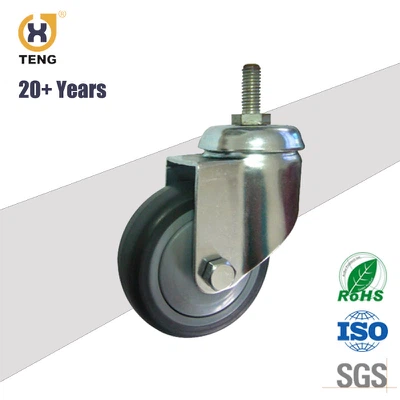
How to determine if industrial casters for the food processing industry need replacement?
Jul 30, 2025
Leave a message
Determining whether industrial casters for the food processing industry need replacement requires a comprehensive assessment based on four aspects, taking into account the specific requirements of the industry:
1. Appearance and Structural Damage
Wheels that show cracks, chips, or deformation (such as high-temperature melting or low-temperature embrittlement), or wear exceeding 1/3 of their original thickness, or severe surface irregularities, require replacement. Stainless steel brackets that show extensive rust, loose welds, or deformation, or loose, broken connecting screws that cannot be tightened, or thread breakage, posing a risk of falling off, must be replaced.
2. Functional Failure
Universal wheels that fail to rotate 360°, jam, or make unusual noises (after removing foreign objects); fixed wheels that experience a sudden increase in rolling resistance or "jumping"; wheels that continue to slide even after the brakes are applied, or pedals that become stuck and cannot be reset, all require immediate replacement.
3. Uncontrollable Hygiene Risks
Residual oil and dirt accumulated in caster gaps and bearing seals due to aging cannot be removed by conventional cleaning and disinfection; degradation and peeling of the wheel or bracket material (such as PU wheel debris) may contaminate food and require prompt replacement.
4. Safety and Compliance Issues
Casters exhibit noticeable sinking and bending under load, indicating insufficient load-bearing capacity. The original casters, due to age or outdated models, do not meet current FDA and other food contact standards and should be replaced even if they are functioning properly.
Replacement threshold: Immediate replacement is recommended if any of the following conditions occur: structural damage, severe brake/rotation malfunctions, unsanitary corners, or insufficient load-bearing capacity. Regular inspections every 3-6 months are recommended to proactively mitigate risks.